





Nifty Next 50 represents the balance 50 companies from NIFTY 100 after excluding the NIFTY 50 companies. NIFTY 100 represents top 100 companies based on full market capitalisation from NIFTY 500 (The Eligible Universe)
− Companies ranked within top 800 based on both average daily turnover and average daily full market capitalisation based on previous six months period data
− Companies traded for at least 90% of days during the previous six months period
NIFTY broad based indices are reviewed twice every year based on six month data ending January 31 and July 31. Eligibility criteria for newly listed security is checked based on the data for a three-month period instead of a six-month period.
Source:NSEIndicesLtd.
Source:NSEIndicesLtd.
| SCHEME PERFORMANCE SUMMARY | |||||||
|---|---|---|---|---|---|---|---|
| Performance of Reliance ETF Junior BeES as on Jan 31st2019 | |||||||
| Particulars | 1 Year CAGR % | 3 Year CAGR % | 5 Year CAGR % | Since Inception | |||
| Reliance ETF Junior BeES | -11.97 | 13.85 | 17.81 | 20.59 | |||
| B: Nifty Next 50 (TRI) | -11.85 | 14.67 | 18.82 | 21.92 | |||
| AB: Nifty 50 Index (TRI) | -0.36 | 14.20 | 13.61 | 17.27 | |||
| Value of Rs.10000 Invested | |||||||
| Reliance ETF Junior BeES | 8,803 | 14,771 | 22,705 | 198,328 | |||
| B: Nifty Next 50 (TRI) | 8,815 | 15,095 | 23,693 | 236,080 | |||
| AB: Nifty 50 Index (TRI) | 9,965 | 14,910 | 18,930 | 127,031 | |||
| Inception Date: Feb 21, 2003 | |||||||
| Fund Manager: Vishal Jain (Since Nov 2018) | |||||||
| B - Benchmark | AB - Additional Benchmark | |||||||
| TRI - Total Returns Index reflects the returns on the index arising from (a) constituent stock price movements and (b) dividend receipts from constituent index stocks, thereby showing a true picture of returns. | |||||||
For Exchange Traded Funds of Reliance Mutual Fund, performance is provided at Scheme level using Dividend Reinvestment NAV’s, since there are no separate plan/option under such Schemes. Period for which scheme’s performance has been provided is computed basis last day of the month-end preceding the date of advertisement.
Past performance may or may not be sustained in future and the same may not necessarily provide the basis for comparison with other investment. Performance of the schemes (wherever provided) are calculated basis CAGR for the past 1 year, 3 years, 5 years and since inception. Dividends (if any) are assumed to be reinvested at the prevailing NAV. Performance of the scheme would be Net of Dividend distribution tax, if any. Face value of scheme is Rs.1.25/- per unit. In case, the start/end date of the concerned period is non-business day (NBD), the NAV of the previous date is considered for computation of returns.
| PERFORMANCE OF OTHER OPEN ENDED SCHEMES MANAGED BY FUND MANAGER: Vishal Jain | ||||||
|---|---|---|---|---|---|---|
| Scheme Name/s | CAGR % | |||||
| 1 Year Return | 3 Years Return | 5 Years Return | ||||
| Scheme | Benchmark | Scheme | Benchmark | Scheme | Benchmark | |
| CPSE ETF | -24.73 | -24.72 | 5.13 | 5.15 | N.A. | N.A. |
| Reliance ETF Bank BeES | -0.01 | 0.10 | 21.06 | 21.45 | 22.16 | 22.56 |
| Reliance ETF Nifty BeES | -0.37 | -0.36 | 13.96 | 14.20 | 13.37 | 13.61 |
Mr. Vishal Jain has been managing CPSE ETF since Nov 2018 Mr. Vishal Jain has been has been managing Reliance ETF Nifty BeES since Nov 2018 Mr. Vishal Jain has been has been managing Reliance ETF Bank BeES since Nov 2018
a.Mr. Vishal Jain manages 4 open-ended schemes of Reliance Mutual Fund.
b. In case the number of schemes managed by a fund manager is more than six, in the performance data of other schemes, the top 3 and bottom 3 schemes managed by fund manager has been provided herein are on the basis of 1 Year CAGR returns.
c. Period for which scheme’s performance has been provided is computed basis last day of the month-end preceding the date of advertisement
d. Different plans shall have a different expense structure.
The above Schemes do not offer any Plans/Options. The performance details are provided at Scheme level using Dividend Reinvestment NAV's.
Past performance may or may not be sustained in future and the same may not necessarily provide the basis for comparison with other Investment. Dividends (if any) are assumed to be reinvested at the prevailing NAV. Performance of the scheme would be Net of Dividend distribution tax, if any. Face value of scheme is Rs.10/- per unit. In case, the start/end date of the concerned period is non-business day (NBD), the NAV of the previous date is considered for computation of returns.
| Reliance ETF Junior BeES Details | ||||||
|---|---|---|---|---|---|---|
| Scheme Features | ||||||
| New Fund Offer (NFO) Period |
|
|||||
| Benchmark Index |
|
|||||
| Underlying Scheme |
|
|||||
| Fund Manager |
|
|||||
| Load Structure |
|
|||||
| Minimum application amount (during NFO & Ongoing Basis) |
|
|||||
| PRODUCT LABEL | ||||||
|---|---|---|---|---|---|---|
| Name of Scheme | This product is suitable for investors who are seeking*: | |||||
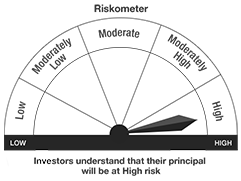
| CPSE ETF (An Open Ended Index Exchange Traded Scheme ) |
• long-term capital appreciation. • investment in securities covered by Nifty CPSE Index. |
|
||||
| Reliance ETF Bank BeES An Open Ended Index Exchange Traded Scheme [Rajiv Gandhi Equity Savings Scheme (RGESS) Qualified Scheme |
• long-term capital appreciation. • investment in securities covered by Nifty Bank Index. |
|||||
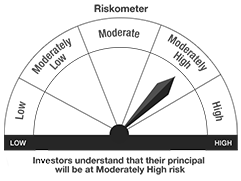
| Reliance ETF Nifty BeES (An Open Ended Index Exchange Traded Scheme [Rajiv Gandhi Equity Savings Scheme (RGESS) Qualified Scheme) |
• long-term capital appreciation. • investment in securities covered by Nifty 50 Index. |
|
||||
| Reliance ETF Junior BeES (An Open Ended Index Exchange Traded Fund (Rajiv Gandhi Equity Savings Scheme (RGESS)Qualified Scheme) |
• long-term Capital appreciation • Investment in Securities Covered by Nifty 50 Index. |
|||||
| *Investors should consult their financial advisers if in doubt about whether the product is suitable for them | ||||||
$No deduction under Rajiv Gandhi Equity Saving Scheme (“The Scheme”) shall be allowed in respect of any fresh investment made from 01.04.2017 onwards:
However, an investor, who has invested in listed units of an equity oriented fund in accordance with the scheme and claimed deduction under section 80CCG of The Income Tax Act, 1961(“The Act”) financial year commencing before the 1st day of April, 2017, shall be allowed deduction under this section till the financial year ending on the 31st day of March, 2019, if he is otherwise eligible to claim the deduction in accordance with the other provisions of the section 80CCG of The Act.
Trading volumes and settlement periods may restrict liquidity in equity and debt investments. Investment in Debt is subject to price, credit, and interest rate risk. The NAV of the Scheme may be affected, inter alia, by changes in the market conditions, interest rates, trading volumes, settlement periods and transfer procedures. The NAV may also be subjected to risk associated with tracking error, investment in derivatives or script lending as may be permissible by the Scheme Information Document. Past performance may or may not be sustained in future.