Connecting the Dots - El Nino and its Impact
Monsoon forecast by IMD
India Meteorological Department (IMD) has released its forecast for the 2026 southwest monsoon. As per IMD, the 2026 southwest monsoon seasonal rainfall for the country is most likely to be below normal of the Long Period Average (LPA). Quantitatively, the seasonal rainfall is likely to be 92% of LPA. IMD also highlighted development of El Nino conditions during the southwest monsoon season.
El Nino is a periodic warming of surface waters in the central and eastern Pacific Ocean that typically disrupts monsoon patterns over South Asia and has historically been associated with weaker-than-normal rainfall in India.
Correlation between El Nino and power demand
A trend observed during past El Nino periods is a positive correlation between El Nino years and power demand, this is driven primarily by higher temperatures and increased cooling requirements.
The El Nino in calendar year 2015 led to an extended hot and humid weather up to Oct'15. The average temperature from Apr to Oct was 2.20C+ for 133 days out of 201 days. Peak demand grew 4-5% during that period versus 1% in FY16. During the summer of Apr-Jun'19, another El Nino year, the average temperature was 2.80C+ for 64 days out of 91 days. Peak demand grew at an unprecedented 7-9% during Apr-Jun'19. The 2023 El Niño-driven dry conditions led to a five year low in monsoon rainfall, 94% of LPA, with extreme hot and humid conditions during Jun-Aug'23. India recorded its highest-ever peak demand of 240/240GW in Aug/Sep'23, up 22%/20% YoY.
Elevated heat conditions during such years tend to push electricity consumption upward, with peak demand often being tested or surpassed. This could create a tailwind for the utilities sector, especially power generation and distribution companies, as higher demand may improve plant load factors and supports better realizations.
Power demand over the years
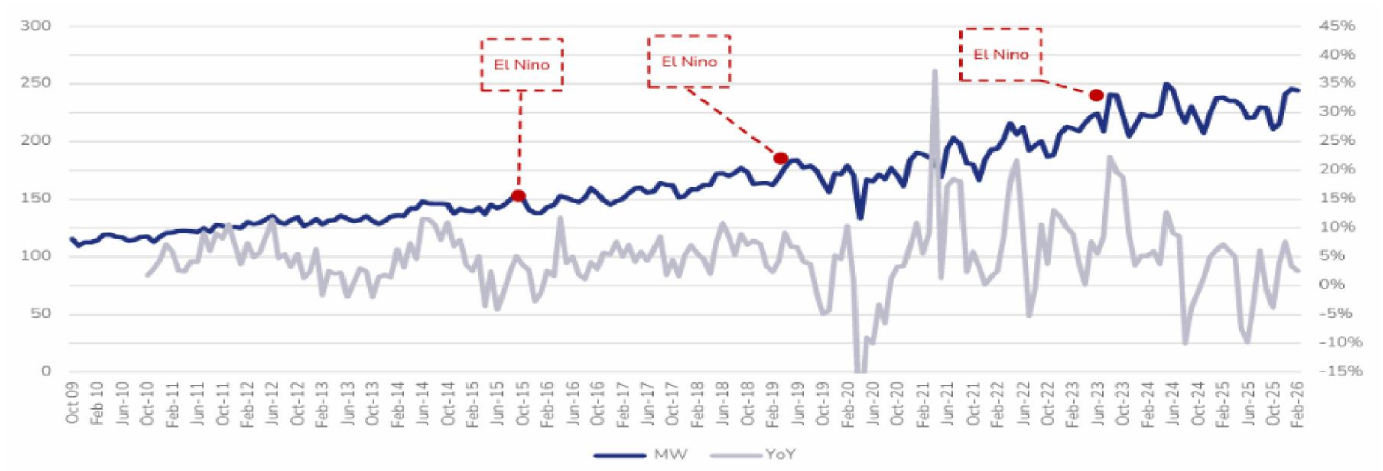
Source: JM Financials, MW - Megawatt
Nippon India Mutual Fund, MF/022/95/1
Low Snow Cover increases demand for Conventional Power sources - During El Niño years, snow cover is typically lower than in normal years. Reduced snow cover leads to lower hydropower generation, which in turn could increase reliance on conventional power sources.
Snow Cover in Ganga River Basin
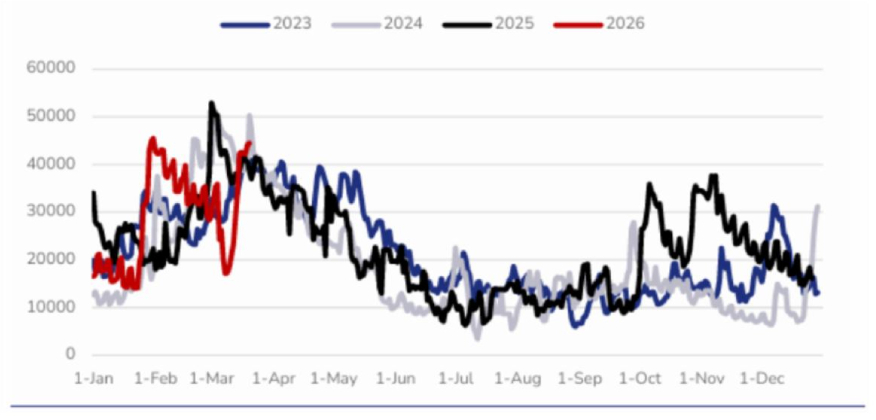
Snow Cover in Brahmaputra River Basin
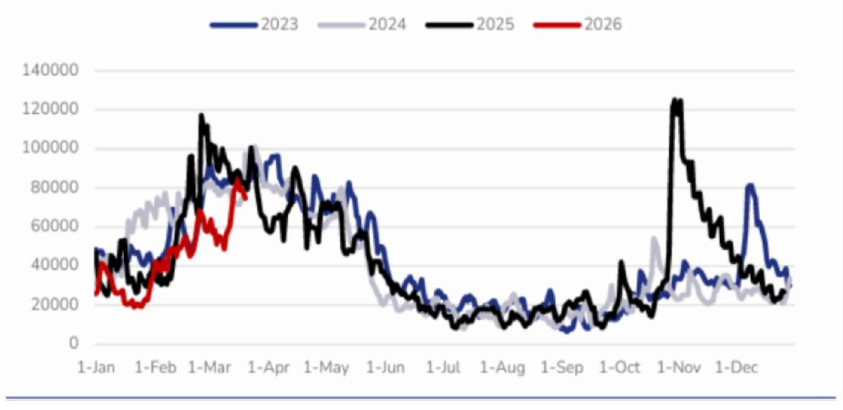
Source: JM Financials
Construction activity could pick up – Excess-rainfall years, such as 2025, kept construction activity relatively subdued. In the current year, construction activity could pick up, given the weak monsoon, which will likely reduce weather-related disruptions at project sites.
Positive for Consumer Durables - Higher temperatures could boost demand for consumer durables such as air conditioners, fans and cooling appliances, supporting discretionary consumption.
Limited impact on Agriculture - Given the high dependence of agricultural and rural incomes on monsoon, El Nino years typically have a negative impact on the rural segment. However, in the current year, the impact may be limited driven by current state of water reserves. Reservoir levels are better than last year, providing a significant buffer for irrigation needs through the growing season. Further, India has ~18mn tons of fertilizer stock as of March’26 which is 37% higher on a YoY basis.
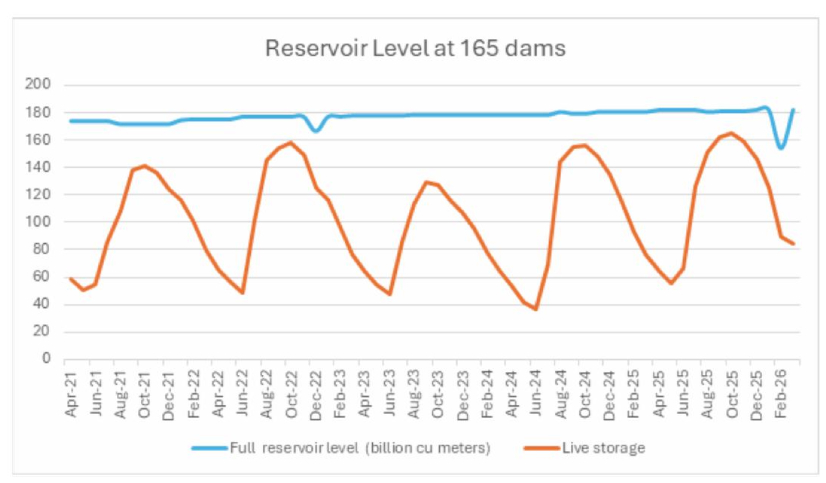
Source: JM Financials
Conclusion - IMD forecasts the 2026 southwest monsoon at 92% of LPA, below normal, with El Niño conditions developing. Historically, El Niño years see higher temperatures and weaker rainfall, driving strong growth potential in power demand due to increased cooling needs, as seen in 2015, 2019 and 2023, when power demand surges. Weak monsoons may support construction activity and may also boost demand for consumer durables. Agricultural impact may be limited, as reservoir levels are better than last year, cushioning irrigation needs.
Disclaimer: The information herein is meant only for general reading purposes and the views being expressed only constitute opinions and therefore cannot be considered as guidelines, recommendations or as a professional guide for the readers. The sectors mentioned are not a recommendation to buy/sell in the said sectors. The document has been prepared based on publicly available information, internally developed data and other sources believed to be reliable. The sponsor, the Investment Manager, the Trustee or any of their directors, employees, associates or representatives (“entities & their associates”) do not assume any responsibility for, or warrant the accuracy, completeness, adequacy and reliability of such information. Recipients are advised to rely on their own analysis, and seek independent professional advice in order to arrive at an informed investment decision. Recipient alone shall be fully responsible for any decision taken based on this document.
Mutual Fund investments are subject to market risks, read all scheme related documents carefully.
